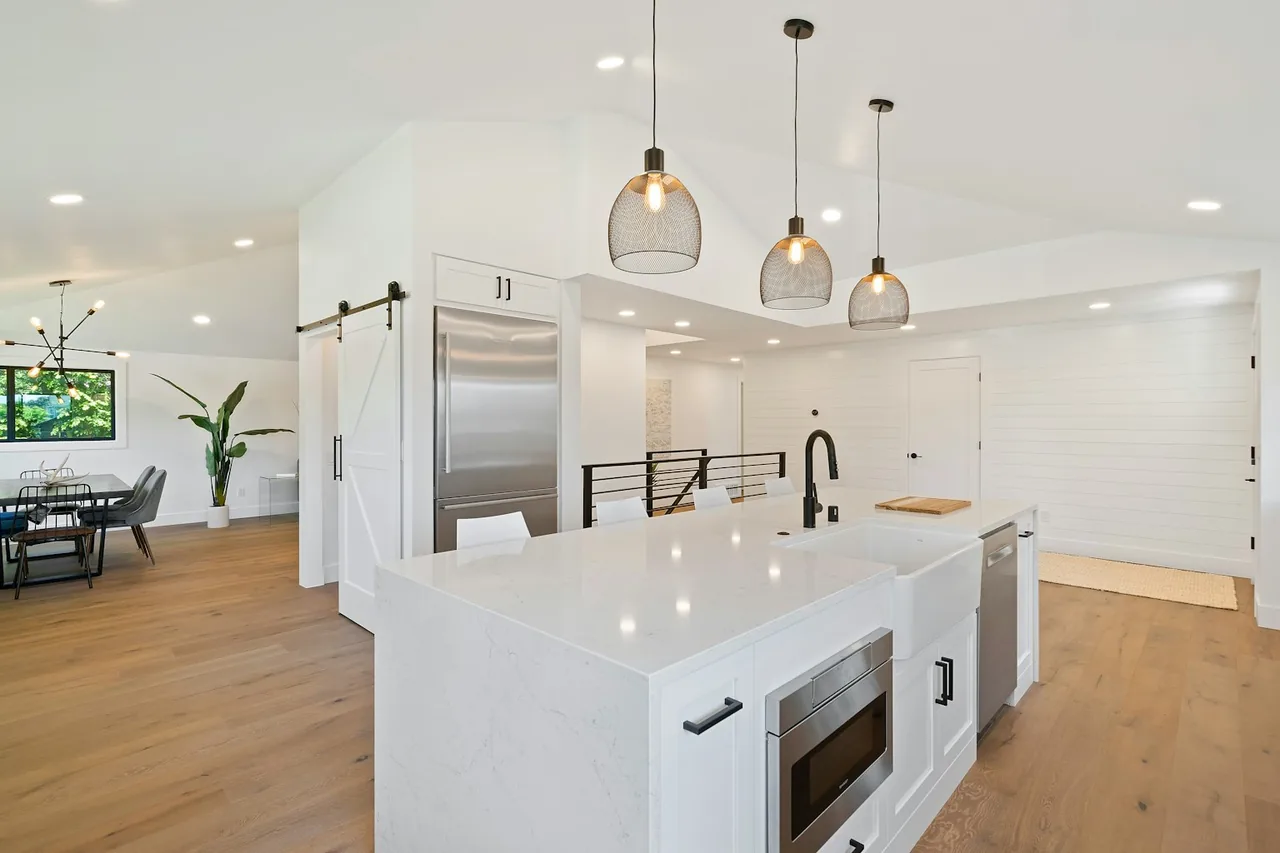
Marble vs. quartz countertops is a choice between genuine natural beauty and engineered durability — and it hinges on how much you value the real thing against how much you value never worrying about the surface. Choose marble — classic veined natural stone — when you want timeless, unrepeatable elegance and a cool surface bakers prize, and you accept that it is soft, porous, and will etch and patina over time. Choose quartz — engineered stone of roughly 90% ground quartz in resin — when you want the marble look without marble's fragility: a non-porous, stain- and etch-resistant surface that never needs sealing. Marble is soft at Mohs ~3 and acid-sensitive; quartz is hard at Mohs ~7 but heat-sensitive from its resin. The deciding question is whether you embrace marble's living patina or want a look-alike that stays pristine. Get a free consultation and a written scope from a vetted fabricator who templates your space before you commit — because with marble especially, slab selection and finish choice decide everything.
The Verdict First: Which Countertop Wins Your Kitchen
This is the most emotional decision in countertops, because one material is prized for aging and the other for staying new. The short answer below holds for most kitchens and baths.
When Marble Is the Right Call
Marble wins for the homeowner who wants genuine, timeless natural stone and embraces its living surface. Its veining is unrepeatable, its cool temperature makes it a favorite for rolling pastry and working chocolate, and to many it only grows more beautiful as it develops a patina of light etching and wear. Marble suits a classic bathroom vanity, a baking-focused kitchen, or any space where authenticity and heritage matter more than a flawless, unchanging surface.
When Quartz Is the Right Call
Quartz wins for the homeowner who loves the marble look but wants a surface that stays pristine with no upkeep. Engineered quartz mimics marble's veining convincingly while being non-porous, stain-resistant, and immune to the acid etching that marks real marble — no sealing, no patina, no worry about a splash of lemon or wine. It is the practical choice for a busy kitchen, a family home, or anyone who wants the aesthetic without the maintenance and vulnerability.
The One Question That Settles It Fastest
Do you embrace a surface that ages, etches, and develops character (marble), or do you want one that looks the same in twenty years as the day it was installed (quartz)? That single question resolves most of this decision. Marble asks you to love its imperfections; quartz asks nothing of you at all. Neither is objectively better — they answer opposite temperaments. Size the job with the countertop cost calculator once the material is set.
Marble vs. Quartz: The Full Side-by-Side Spec Comparison
The table sets the two surfaces against each other on the specs that decide daily life — hardness, porosity, etching, heat, and maintenance — with documented values tied to their scales, not showroom language.
| Attribute | Marble (natural) | Quartz (engineered) |
|---|---|---|
| What it is | Natural metamorphic stone, quarried in slabs | Engineered stone — ~90–93% ground quartz in resin |
| Hardness | Soft — Mohs ~3; scratches more easily | Hard — Mohs ~7; strongly scratch-resistant |
| Porosity | Porous — needs periodic sealing | Non-porous — never needs sealing |
| Acid etching | Etches from acids — wine, citrus, vinegar dull the finish | Etch-resistant — acids do not mar the surface |
| Stain resistance | Vulnerable if the sealer lapses | High — resists stains without sealing |
| Heat tolerance | Fairly heat-tolerant as natural stone (still use care) | Sensitive — resin can scorch; use trivets |
| Appearance over time | Develops a patina — etches and ages | Stays uniform — looks the same for decades |
| Pattern | Unique, unrepeatable natural veining | Consistent engineered pattern; marble look-alikes |
| Baking surface | Prized — cool surface for pastry and chocolate | Fine, but not as cool as natural marble |
| Finish options | Polished (shows etching) or honed (hides it) | Typically polished; matte options exist |
| Relative cost | $$$–$$$$ (premium/exotic marbles high) | $$$–$$$$ by brand and grade |
| Lifespan | Decades to a lifetime; ages rather than wears out | Decades — a permanent surface |
Read across and the trade is stark: marble wins authenticity, unrepeatable beauty, and a baker's cool surface; quartz wins hardness, stain and etch resistance, and maintenance. The pivot is that marble's defining traits — softness, porosity, etching — are exactly what quartz was engineered to eliminate. That is why this is a temperament choice, not a performance ranking. Compare where each sits in the material lifespan comparison.
Choose Marble If…
Six conditions push the decision toward genuine natural marble. If most describe your taste and how you use the space, marble is the surface that will satisfy you longest — and each is about what you value, because marble is chosen with the heart as much as the spec sheet.
- You want genuine, unrepeatable natural beauty
- Marble's veining is formed by geology and shared by no other slab. If you want a surface that is authentically one of a kind and carries the weight of real stone, only natural marble delivers it — a quartz look-alike, however convincing, is a printed pattern by comparison.
- You bake and want a cool work surface
- Marble stays naturally cool, which pastry chefs prize for rolling dough, tempering chocolate, and working laminated doughs. If baking is central to your kitchen, marble's cool surface is a functional advantage quartz only partly matches.
- You embrace a patina rather than fear it
- Marble etches and ages into a lived-in surface many owners come to love. If you see a little etching and wear as character — the mark of a real, used kitchen — rather than damage, marble rewards that temperament; if it would bother you, that honesty points to quartz.
- The surface sees light use or is a vanity
- A powder-room or primary bathroom vanity, a baking station, or a low-traffic secondary counter suits marble, where acid exposure is limited and the stone's softness is less tested. Marble shines where it is not fighting daily kitchen abuse.
- You will maintain it and use a honed finish
- Sealing marble periodically and choosing a honed (matte) finish that hides etching keeps it looking its best. If you are willing to seal and to select the right finish, marble's vulnerabilities become manageable — see countertop sealing and stone polishing for restoration.
- Timeless, classic style is the goal
- Marble has anchored elegant interiors for centuries and reads as heritage in a way engineered stone cannot. If a timeless, classic aesthetic with genuine provenance is what you want, marble is the material with the history — hand-select the slab and price it with a fabricator under the countertops hub.
Choose Quartz If…
The mirror holds for quartz. If these six describe your household and priorities, quartz is the surface that will frustrate you least — and most are practical facts about how the space is used.
- You want the marble look with none of the fragility
- Many quartz lines mimic marble's veining convincingly while staying non-porous and etch-resistant. If you love how marble looks but not how it behaves, quartz gives you the aesthetic without the acid-sensitivity and sealing — the single most common reason people choose it over marble.
- The kitchen is busy and used hard
- A family kitchen with heavy prep, spills, and constant use punishes soft, porous marble. Quartz's hardness at Mohs ~7 and stain resistance handle that daily abuse without etching or staining — the practical kitchen countertop choice.
- You want zero sealing and low maintenance
- Quartz never needs sealing and cleans with soap and water, while marble asks for periodic sealing and careful cleaning. If a maintenance-free surface is the priority, quartz removes the upkeep marble requires — see countertop sealing for what you would avoid.
- Acids and spills are a daily reality
- Lemon, vinegar, wine, and coffee all etch or threaten marble; quartz resists them without a mark. If your cooking involves citrus and acids or you simply do not want to police every spill, quartz's etch resistance is decisive.
- You want a surface that stays pristine
- Quartz looks the same in twenty years as on install day — no patina, no etching, no aging. If a flawless, unchanging surface is what you want rather than a living one, that is quartz's promise and marble's opposite.
- You cook with trivets and can protect against heat
- Quartz's one weakness is heat — its resin can scorch under a hot pan. If you use trivets by habit, that limitation is easily managed and quartz's advantages over marble stand; if you set hot pans down freely, weigh granite too, compared in the quartz vs. granite guide. Model quartz in the quartz countertop cost guide.
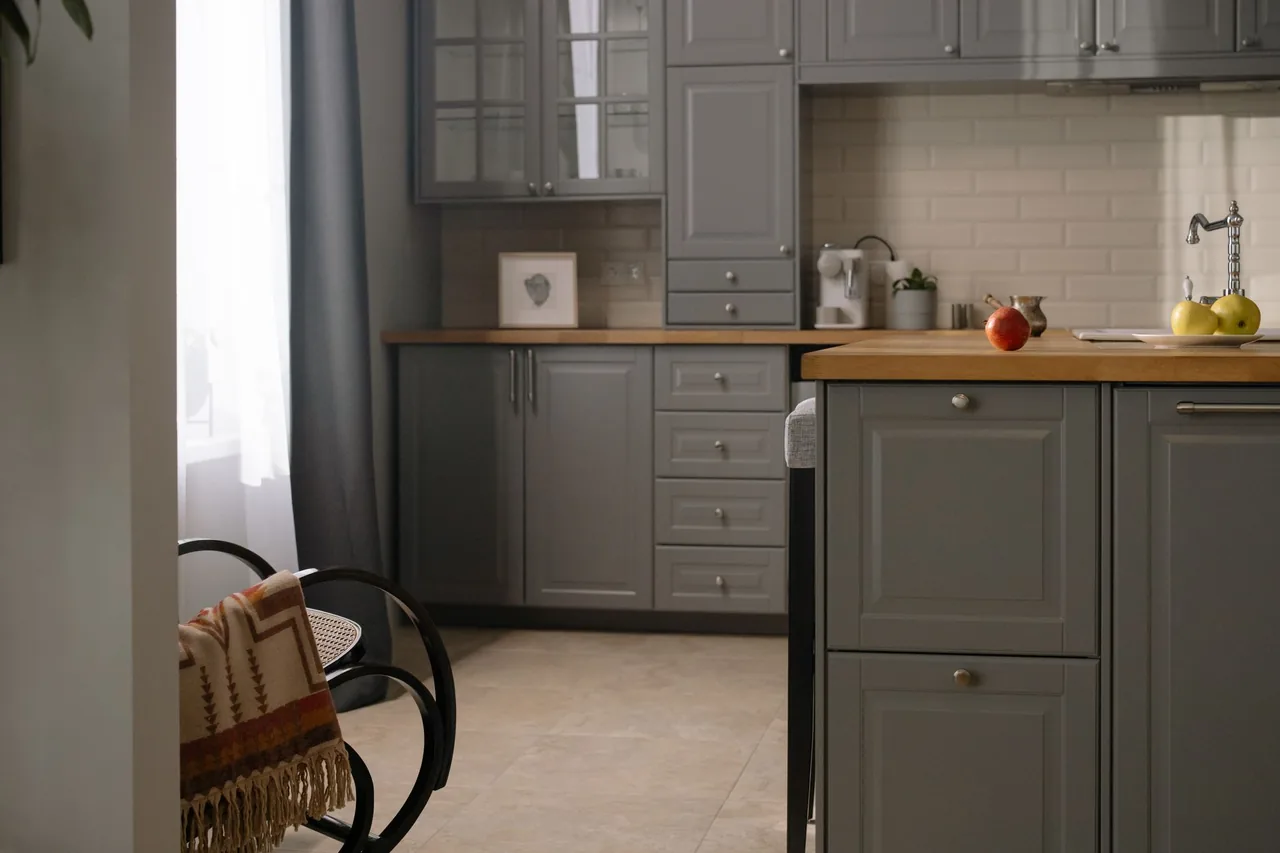
Cost, Lifespan, and Installation Differences Compared
Both are premium, decades-long surfaces installed by a fabricator, so the meaningful differences are how each is priced, how maintenance and vulnerability accrue over time, and how finish and slab selection shape the result.
| Dimension | Marble | Quartz | What it means for you |
|---|---|---|---|
| Relative upfront cost | $$$–$$$$ (exotic marbles run high) | $$$–$$$$ (brand + grade) | Both premium; rare marbles and top quartz brands top the range |
| Ongoing maintenance cost | Higher — sealing + careful care + possible re-honing | Minimal — no sealing | Quartz has the lower lifetime upkeep by a clear margin |
| Vulnerability over time | Etches, stains if unsealed, scratches (soft) | Resists etching, stains, scratches | Marble asks for care; quartz forgives neglect |
| Expected lifespan | Decades to a lifetime; ages rather than fails | Decades — permanent | Both last; they differ in how they look while lasting |
| Restorability | Re-hone and reseal to refresh a worn surface | Chip/seam repair; not re-honed like marble | Marble can be brought back; see restoration |
| Fabrication | Templated, cut, edged; softer stone needs care | Templated, cut, edged from a uniform slab | Both need skilled fabrication |
| Slab selection | Hand-select the unique slab; match veining | Catalog design; consistent and predictable | Marble involves you in choosing the actual stone |
| Finish choice impact | High — honed hides etching, polished shows it | Lower — finish is mostly aesthetic | Finish is a functional decision with marble |
The honest read is that upfront cost overlaps — both are premium, and an exotic marble can rival or exceed top quartz — so the lifetime difference is maintenance and vulnerability, not sticker price. Quartz costs less to live with; marble costs more in care but offers something quartz cannot replicate. No dollar figure here replaces a fabricator's quote; compare what moves each price in the cost guides and size your own kitchen with the countertop cost calculator.
Why the Finish Choice Is a Functional Decision for Marble
With quartz, finish is mostly aesthetic; with marble, it changes how the stone lives. A polished marble is glossy and vivid but shows every etch as a dull spot against the shine, so acid marks stand out. A honed (matte) marble hides etching far better because there is no gloss for a dull spot to contrast against — which is why fabricators steer marble kitchen counters toward honed finishes. Choosing the finish is therefore a durability decision, not just a look, and a good fabricator explains that trade before you pick. That single choice can be the difference between marble that frustrates and marble that ages gracefully — see stone polishing.
The Care and Support the Slab Needs
Both stones are heavy and need sound, level cabinetry with proper support at overhangs, and both are templated to your exact space. Marble adds two care considerations: its softness means fabrication and handling require more care to avoid chips, and its daily use benefits from pH-neutral cleaners and prompt spill cleanup to protect the sealer. Quartz asks only for trivets and mild cleaners. A fabricator confirms cabinet readiness and, for marble, walks you through the care rhythm before templating — because a marble counter's longevity is as much about how it is treated as how it is installed.
Which Countertop Fits Your Kitchen? A Decision Tree
The choice is the output of a short chain of questions about your temperament, how you use the space, and what look you want. Walk it in order; each branch narrows the two to one defensible pick.
- Do you embrace a surface that ages and etches, or want one that stays pristine? If a living patina appeals, marble is your material. If a flawless, unchanging surface is the goal, choose quartz — this single branch resolves most of the decision.
- How hard is the surface used? A busy family kitchen with heavy prep and acid exposure punishes soft, porous marble and favors quartz. A light-use vanity or a baking station is friendlier to marble — see bathroom countertops.
- Do you bake and want a cool work surface? If pastry and chocolate work are central, marble's naturally cool surface is a real functional draw. If not, that advantage does not weigh, and quartz's durability comes forward.
- Will you seal and maintain the stone? If you will seal marble periodically, choose a honed finish, and clean with care, marble's vulnerabilities become manageable. If you want zero upkeep, quartz's no-seal surface is the answer.
- What if you want the marble look but not the marble behavior? Then quartz's marble look-alikes give you the aesthetic without the etching and sealing — the most common resolution of this whole comparison. Confirm the finish and slab with a fabricator under the countertops hub, and if heat tolerance also matters, weigh granite in the quartz vs. granite guide.
Run honestly, this tree returns a clear pick — and the frequent landing spot is quartz for those who love marble's look but not its upkeep, and marble for those who genuinely want the real, living stone.
Torn between the real stone and the look-alike?
Tell us how you use your kitchen and we will match you with a vetted fabricator who shows you slabs and finishes, explains the care each needs, and puts the scope in writing — free and with no obligation.
Common Marble-vs-Quartz Mistakes, Consequences, and Prevention
Most regret over this choice traces to misjudging temperament — putting marble where its vulnerabilities are tested daily, or expecting quartz to be something it is not. Naming the errors is how you avoid a surface that disappoints for a foreseeable reason.
| Mistake | What it causes | The prevention |
|---|---|---|
| Putting marble in a heavy-use kitchen expecting it to stay pristine | Etching, staining, and disappointment from a living surface | Choose marble only if you embrace patina; otherwise pick quartz |
| Choosing a polished marble for a working kitchen | Every acid etch shows as a dull spot against the gloss | Use a honed (matte) finish that hides etching |
| Letting acids sit on marble | Citrus, wine, and vinegar etch the surface quickly | Wipe spills immediately; keep the sealer current |
| Setting a hot pan directly on quartz | Scorching or discoloration of the resin binder | Always use trivets on quartz; consider granite if you won't |
| Skipping marble's periodic sealing | Stains soak into porous stone that is no longer protected | Reseal on schedule; test with a water-bead check |
| Buying either stone off a small sample | Marble's veining or quartz's tone looks different at scale | Hand-select the marble slab; view a large quartz sample |
| Using harsh or acidic cleaners on either | Etched marble and dulled quartz resin | Use pH-neutral stone cleaner on both surfaces |
Every row is a matter of matching the material to your temperament and habits — which is why the most valuable conversation is the honest one where the fabricator asks how you will actually use the surface before you fall for a slab.
How Hardness, Porosity, and Etching Actually Work
Three properties explain everything about how these two surfaces behave — hardness, porosity, and etching — and understanding each clarifies why marble asks for care and quartz asks for nothing.
Hardness on the Mohs Scale
Mohs hardness ranks scratch resistance from 1 to 10, and the gap between these two materials is wide. It is the number behind marble's reputation for softness.
Why Marble Is Soft and Quartz Is Hard
Marble rates about 3 on the Mohs scale — soft enough that knives, grit, and dropped utensils can scratch it, which is one reason it belongs in lower-abuse settings. Quartz rates about 7 because it is roughly 90% quartz mineral, making it strongly scratch-resistant in daily use. That four-point difference is not academic: it is why a busy kitchen scratches marble and shrugs off quartz. Neither should be cut on directly, but marble's softness is a genuine daily vulnerability quartz does not share.
What Hardness Does Not Explain
Hardness predicts scratching, not etching or staining — and with marble, etching is the more common complaint than scratching. A marble surface can be scratch-free and still be dulled by acid, because etching is a chemical reaction, not abrasion. So Mohs tells only part of marble's story; the etching and porosity below tell the rest, and they are where marble's real maintenance lives.
Why the Scratch Number Misleads Marble Shoppers
A shopper who fixates on the Mohs ~3 figure often walks away thinking scratching is marble's main risk and buys accordingly — a cutting board, a no-drag rule — and is then blindsided when a splash of lemon etches a dull spot on a surface that never got scratched. The lesson is that marble's vulnerability is chemical before it is mechanical, so the honed-finish and sealing decisions matter more than the hardness spec, and the number that reassures a stone shopper is the one that misdirects a marble shopper.
Porosity, Etching, and the Patina
Porosity and etching are two different vulnerabilities marble has and quartz does not, and together they define the maintenance divide between the two surfaces.
Why Marble Etches and Stains
Marble is calcium carbonate, which reacts chemically with acids — lemon, vinegar, wine, tomato — in a process called etching that dulls the finish where the acid touched, independent of any sealer. Separately, marble is porous, so without a periodic sealer, liquids can soak in and stain. Etching is a chemical dulling; staining is absorption; marble is subject to both. The accumulation of light etching and wear becomes a patina — which marble lovers embrace and marble skeptics reject. Quartz's resin makes it non-porous and chemically inert to kitchen acids, so it neither etches nor stains and never develops a patina. That is the fundamental behavioral divide: marble lives and changes; quartz stays fixed — and a honed finish plus diligent sealing is how marble owners keep the living surface graceful, covered under countertop sealing.
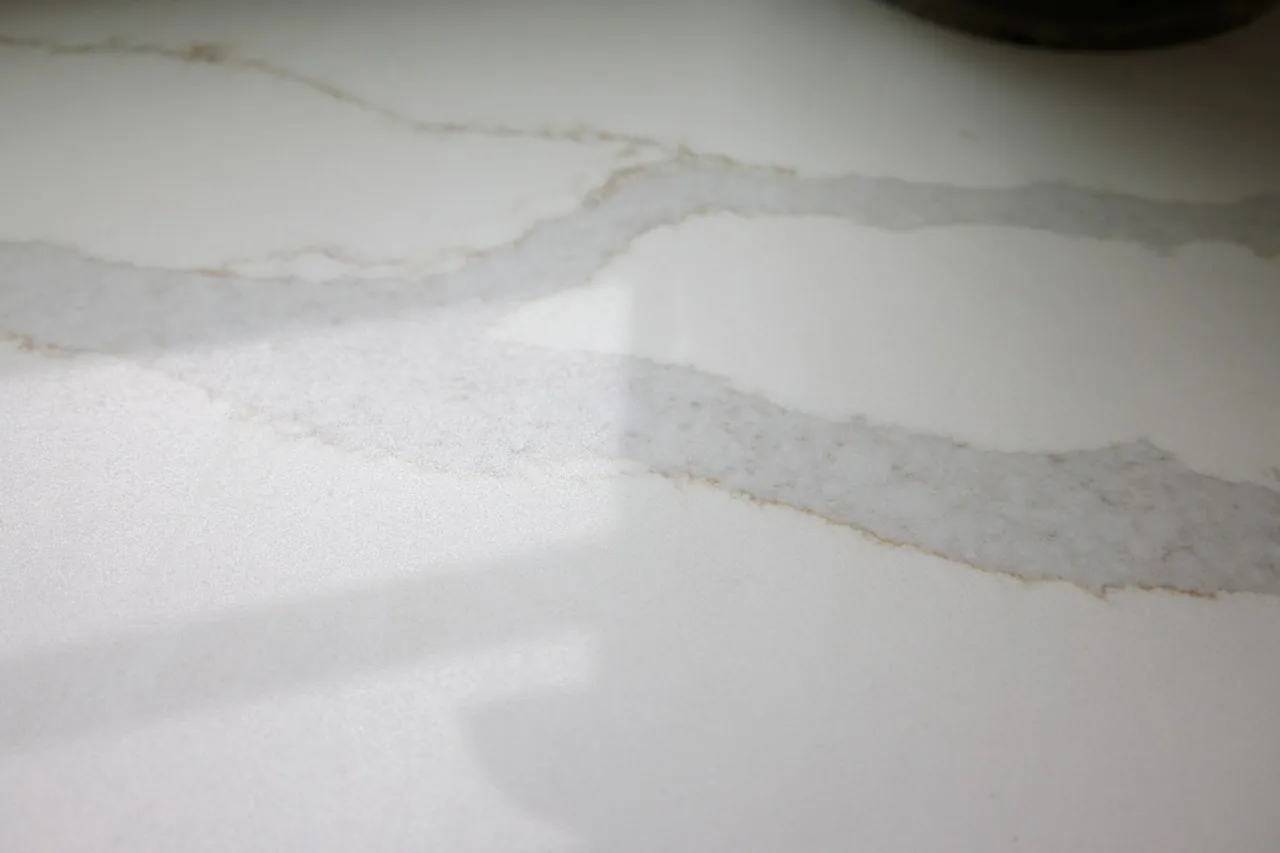
The Temperament Divide: A Living Surface vs. a Fixed One
More than any spec, this comparison comes down to temperament — whether you want a surface with a life of its own or one that never changes — and being honest with yourself about that is how you avoid regret.
Living With Marble
Marble is a relationship, not an appliance. It asks you to seal it, to reach for a trivet-free but acid-aware caution, to choose a honed finish, and above all to accept that it will etch and patina no matter how careful you are. Owners who love marble describe those marks as the record of a real, used kitchen — the beauty of a surface that carries its history. Owners who regret marble are almost always the ones who wanted it to stay perfect. If you can love the imperfections, marble gives back a genuine, timeless stone nothing else replicates; if you cannot, no finish or sealer will make you happy with it.
Living With Quartz
Quartz is the opposite bargain: it asks nothing and gives back permanence. Wipe it with soap and water, keep a trivet handy for hot pans, and it looks the same for decades — no sealing, no etching, no patina, no worry. For many households, that freedom from care is exactly the point, and quartz's marble look-alikes mean you can have the aesthetic you fell in love with while the surface behaves like an appliance. The trade is that quartz will never be the real, geological thing, and its resin makes it heat-sensitive where marble is not. If a pristine, low-worry surface is what you want, quartz delivers it completely — see quartz countertops.
Marble vs. Quartz Glossary
The terms below recur across slab yards, fabrication quotes, and care instructions for both surfaces — each defined as its working meaning on a real countertop job, so you can read a bid and judge whether it fits your kitchen.
- Etching
- A chemical dulling of marble's surface where an acid — citrus, wine, vinegar — reacts with the stone, independent of any sealer. The defining marble vulnerability quartz does not share.
- Patina
- The accumulation of light etching and wear that gives aged marble its lived-in character. Loved by marble owners, avoided by those who want a pristine surface.
- Mohs hardness
- A 1–10 scale of scratch resistance. Marble is soft at ~3; quartz is hard at ~7 from its quartz-mineral content.
- Non-porous
- A surface liquids cannot penetrate, so it never needs sealing and resists stains. Quartz is non-porous; marble is not.
- Porous
- A surface with microscopic voids that absorb liquid, requiring a periodic sealer to resist stains. Marble is porous.
- Honed finish
- A matte, non-reflective stone finish that hides etching far better than a polished one — the recommended finish for marble kitchen counters.
- Polished finish
- A glossy, reflective stone finish that looks vivid but shows every etch as a dull spot against the shine. Better for low-acid, low-use marble surfaces.
- Engineered stone
- A manufactured surface — quartz is ~90–93% ground natural quartz bound in resin — engineered for consistency, non-porosity, and etch resistance.
- Penetrating sealer
- A liquid that soaks into porous stone and repels water and oil, keeping marble stain-resistant. Reapplied periodically; it does not stop etching.
- Slab
- The large sheet of stone a countertop is cut from. Marble slabs are hand-selected and unique; quartz slabs are manufactured and consistent.
- Templating
- Measuring the space precisely to create the pattern a fabricator cuts the slab to, ensuring tight fits at walls and appliances.
- Re-honing
- Grinding and refinishing a worn or etched marble surface to refresh it — a restoration only natural stone allows, covered under countertop restoration.
A Real Marble-vs-Quartz Decision
One representative scenario shows how temperament and use, not the budget, drive the call between the real stone and its look-alike.
How to Vet a Countertop Fabricator
With marble especially, the fabricator's guidance decides whether you love the result — finish choice, slab selection, and honest expectation-setting are all craft. These questions separate a shop that sets you up to be happy from one that just sells a slab.
- They ask how you will actually use the surface
- A good fabricator asks about your cooking, acid exposure, and tolerance for patina before recommending marble — and steers you to quartz or a honed finish if your habits and the stone are mismatched. A shop that sells marble for a heavy citrus kitchen without that conversation is a red flag.
- They recommend the right finish for marble
- Ask whether they suggest honed or polished for your use. A credible answer explains that honed hides etching and suits working kitchens, while polished shows it — treating finish as the functional decision it is with marble, not just a look.
- They let you hand-select the marble slab
- For natural stone, ask to see and approve the actual slab, matching veining to your space. A fabricator who lets you pick the physical stone understands marble's uniqueness is the point.
- They explain the care each surface needs, honestly
- Ask what maintenance your choice requires. A real answer names marble's sealing, pH-neutral cleaning, and inevitable patina, and quartz's trivets and no-sealing — and does not oversell marble as low-maintenance or quartz as heat-proof.
- They confirm cabinet support and template precisely
- Ask how they measure and handle overhangs. A professional templates digitally, plans seams where they show least, and specs support for any unsupported span before the heavy slab goes on.
- They put the scope, finish, and warranty in writing
- Ask for the full scope — slab, finish, edge, seams, cutouts, support, and the labor warranty — in writing before work starts. A shop accountable for its fabrication and install, and willing to return if a seam or edge fails, stands behind the craft the material warranty never covers.
Get a spec-matched recommendation
Tell us your surface, room, and goals — free, independent guidance and a vetted installer, nationwide.
Beyond the Two: When Another Stone Fits Better
Marble and quartz frame the beauty-versus-durability decision, but the honest comparison names the surfaces that bridge or sidestep it rather than forcing the pair.
When Quartzite Bridges the Gap
If you want genuine natural stone with a marble-like look but far more toughness, quartzite is the bridge — a natural metamorphic stone rating Mohs ~7, harder than granite, that often reads like marble while resisting scratching. It still needs sealing as a porous natural stone, but it does not etch and scratch the way marble does, offering much of marble's beauty with much of quartz's durability. For the homeowner who wants real stone and can accept sealing, quartzite is frequently the answer neither marble nor quartz provides — line it up in the material comparison tool.
When Granite or Porcelain Fits Instead
If heat tolerance and a durable natural slab matter more than a marble look, granite handles hot pans and daily abuse — weigh it against quartz in the quartz vs. granite guide. If you want a non-porous, heat- and UV-stable surface with a marble-look pattern for indoors or out, porcelain is a sintered slab that sidesteps quartz's heat weakness and marble's fragility at once. Start from the full range under the countertops hub.
Why Compare Your Countertops Through Pro Work Home Surface
Pro Work Home Surface is not a fabricator and does not sell you stone — we are a national authority on home surfaces that matches homeowners with vetted local fabricators and holds them to a published bar. On a marble-versus-quartz decision, that means an honest read on whether your temperament and kitchen actually suit a living stone or a fixed one, from someone with no slab to move.
- A free consultation and an itemized written scope
- Every connection starts with a no-obligation consult and a written quote that lines out the slab, finish, edge, seams, and support separately — so you compare the whole job, not a headline rate.
- An expectation-first standard, applied before we connect you
- Fabricators are screened on whether they ask how you will use the surface and recommend the right stone and finish — the honesty that decides whether you love marble or regret it.
- An unbiased material recommendation
- Because we sell no stone, the guidance is which surface fits your taste and habits — including the honest cases where quartzite, granite, or porcelain fits better than either.
- National coverage, local fabricators
- We match you with fabricators in your area nationwide, so the standard is consistent even though the shop is local — whether the project is a single vanity or a full kitchen split between marble and quartz.
Countertops are one of eight categories we cover across home surfaces. Dig into the how-and-why in our learning center, compare what moves each price in our cost guides, line the materials up spec-for-spec with the material comparison tool, check documented lifespans in our material data, and start from the countertops category hub or the full range of home surfaces.